

Physiotherapy can be a safe and practical next step when a strain, soft tissue injury, or stubborn pain starts interfering with everyday life.
Maybe it is your child who twisted an ankle at sports practice, or maybe you are trying to get through workdays with a sore back that will not settle down. In moments like these, recovery is not only about easing pain. It is also about restoring strength, movement, and confidence so the body can function normally again.
This type of therapy offers a structured, movement-based approach that supports recovery and helps reduce the risk of setbacks.
Why choose physiotherapy after an injury
Physiotherapy is commonly used after injury or surgery to help people recover, improve strength, flexibility, and mobility, and move more safely and confidently.
A physiotherapist works with the person’s current symptoms and activity goals, then builds a plan around what their body needs most. That plan may include supervised exercise, stretches, and movements designed to improve how the body performs.
Depending on the situation, treatment may also involve hands-on care and other supportive techniques as part of a broader rehabilitation plan.
| Physiotherapy focus | What it supports |
|---|---|
| Movement and function | Helps the body recover after injury or surgery |
| Strength and mobility | Improves flexibility, range of motion, and confidence in movement |
| Rehabilitation | Supports a safer return to daily life and activity |
Why an assessment comes first
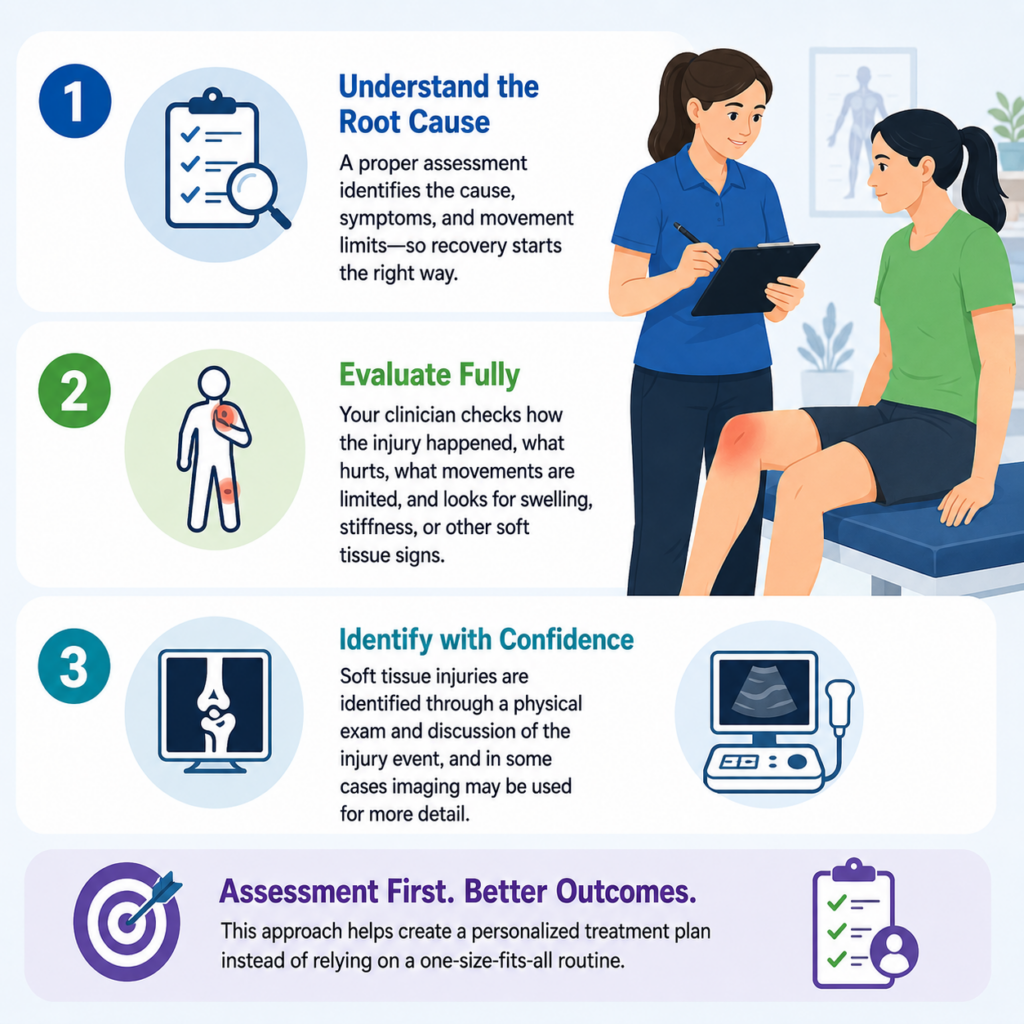
- A proper assessment is required to start off physiotherapy because recovery works best when the cause, symptoms, and movement limits are understood first.
- A clinician will usually look at how the injury happened, what hurts, what movements are limited, and whether there may be swelling, stiffness, or other signs of soft tissue damage.
- Soft tissue injuries are often identified through a physical exam and a discussion of the injury event, and in some cases imaging may be used for more detail.
- This assessment-first approach helps create a personalized treatment plan instead of relying on a one-size-fits-all routine.
How to manage pain in the early stages
Physiotherapy often begins by helping people manage the early phase of an injury, when pain, swelling, and sometimes bleeding are most active.
The RICE method, which includes rest, ice, compression, and elevation, is a common first-response strategy for acute musculoskeletal and soft tissue injuries. It can help reduce inflammation, pain, swelling, and bleeding, but it is mainly for immediate relief. Once the acute phase passes, longer-term rehabilitation needs to take over so the tissue can heal properly and movement can be rebuilt.
Early-stage recovery at a glance
| Stage | Main goal | Example focus |
|---|---|---|
| Acute phase | Reduce pain and swelling | RICE, rest, protection, symptom control |
| Recovery phase | Restore safe movement | Gentle mobility, guided exercise, gradual loading |
Staged rehabilitation: rebuilding movement, strength, and control
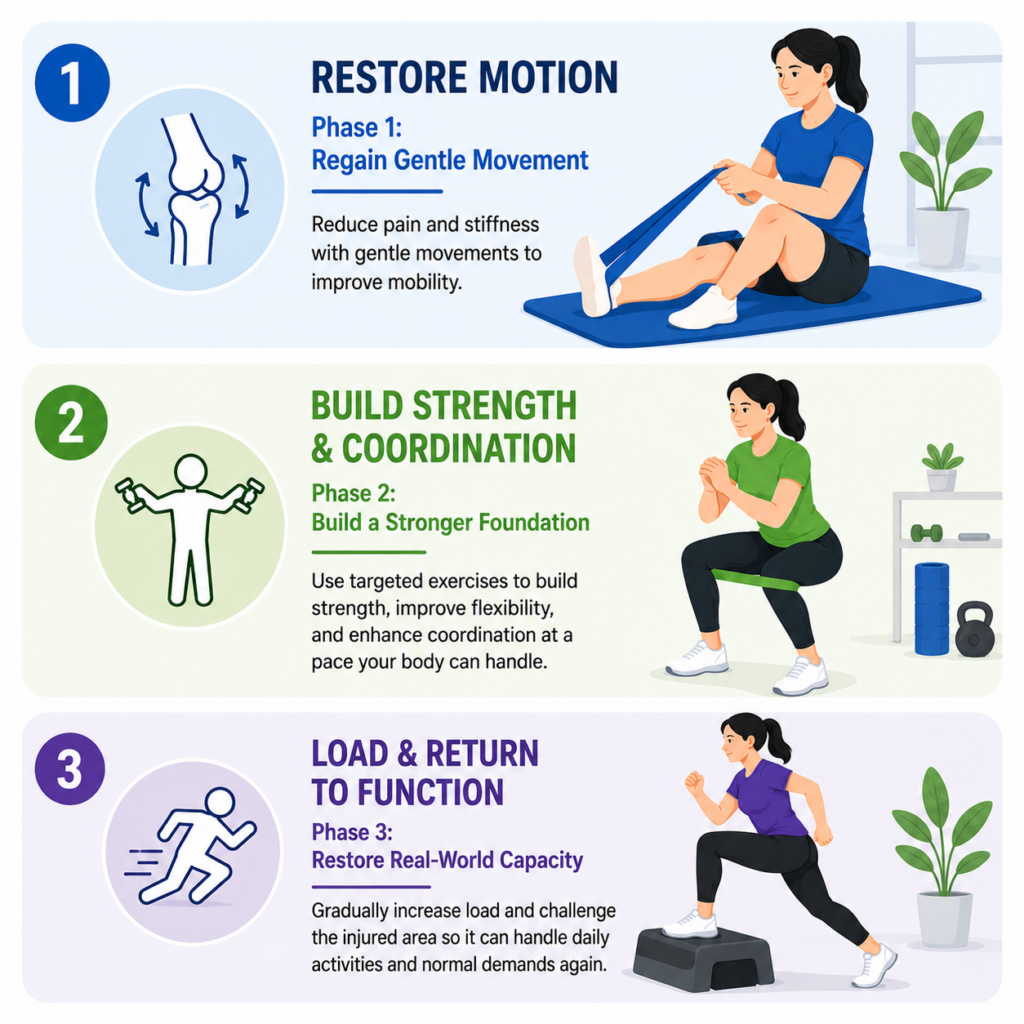
- Rehabilitation usually progresses in stages. First, the goal is to restore gentle motion so the injured area does not become too stiff.
- Next comes rebuilding strength, flexibility, and coordination with exercises that match the person’s tolerance.
- After that, the injured area is loaded more directly and in a controlled way so it can handle normal demands again.
This progression may include supervised exercise, stretching, strengthening, and manual treatment, with changes guided by symptoms and response. A staged plan matters because tissues need time to heal, but they also need the right level of challenge to recover well. Done properly, rehabilitation helps prevent an injury from becoming chronic and helps people regain confidence in movement.
Why physiotherapy matters for common injuries
Physiotherapy is especially helpful for familiar problems such as muscle strains, soft tissue injuries, and lower back pain.
Soft tissue injuries:
- Involve muscles, tendons, and ligaments, and they can happen from sudden force, overuse, or trauma.
Lower back pain:
- Commonly comes from strain or injury to muscles or tendons in the back.
In both situations, rehabilitation can help strengthen supporting muscles, improve flexibility, and reduce the chance of the same problem recurring.
Common examples physiotherapy can support
- Muscle strains and sprains
- Soft tissue injuries from sports, accidents, or overuse
- Lower back pain linked to muscle or tendon strain
Return-to-activity and injury prevention
Physiotherapy is not only about pain relief. The final goal is to help a person return to work, sport, family routines, and daily movement with the right level of readiness.
Rehabilitation is designed to help people get back, keep, or improve the abilities they need for daily life, and that includes better:
- body mechanics
- posture
- alignment
- movement control
This is where injury prevention becomes a major benefit, because a well-built rehab plan can reduce the chance of reinjury and help the body tolerate normal activity again.
Why choose Canada Scoliosis & Neuro Centre for physiotherapy

Physiotherapy at Canada Scoliosis & Neuro Centre is an available option for anyone looking for an evidence-based recovery plan after injury.
Our clinic’s general physiotherapy approach focuses on
- assessment
- evidence-based treatment
- manual physical therapy
- individualized rehabilitation plans designed to restore strength, mobility, and function
If an injury, lingering pain, or movement limitation is making daily life harder than it should be, a physiotherapy assessment can be a helpful first step. For more information, you can contact us on +1 647-350-1062.
FAQs
How does physiotherapy help with injury recovery?
Physiotherapy helps improve recovery by restoring movement, strength, flexibility, and function through personalized rehabilitation programs and guided exercise.
Is physiotherapy useful for soft tissue injuries?
Yes. Physiotherapy can help manage pain, improve mobility, strengthen supporting muscles, and support healing after soft tissue injuries.
When should I start physiotherapy after an injury?
The timing depends on the injury, but many people benefit from an assessment soon after the acute phase, to ensure a safe and effective recovery plan.
Can physiotherapy help prevent future injuries?
Yes. Physiotherapy can improve movement patterns, posture, strength, flexibility, and body mechanics, all of which contribute to injury prevention.
Can physiotherapy help with lower back pain?
Physiotherapy is commonly used to manage lower back pain by improving flexibility, strengthening supporting muscles, and restoring normal movement patterns.
Key takeaways
- Physiotherapy helps recovery work better because it addresses more than pain alone.
- It supports assessment, early symptom control, staged rehabilitation, and a safer return to normal activity while helping reduce the risk of future injury.