

If you have been referred to physiotherapy after a stroke, brain injury, or a diagnosis like cerebral palsy, you may have already heard about Neurodevelopmental Treatment (NDT) or the Bobath approach.
These terms can sound clinical, but the idea is simple. In simple terms, this approach helps the nervous system relearn efficient movement. This article explains what NDT is, when it’s used, and what realistic progress looks like.
What is Neurodevelopmental Treatment (NDT)
Neurodevelopmental Treatment (NDT) is a hands-on physiotherapy approach designed for people whose movement is affected by a condition in the brain, spinal cord, or nervous system. The name breaks down into two simple ideas:
| Term | What it means |
|---|---|
| Neuro | The brain and nervous system |
| Developmental Treatment | Therapy that enables relearning smoother, more efficient movement patterns, step by step |
NDT is also known as the Bobath Concept, named after Karel and Berta Bobath, who began developing the approach in the 1940s. At its core, NDT is built on neuroplasticity. This is the brain’s ability to reorganize itself and form new pathways after an injury.
Where standard exercise programs often focus on repeating a movement, NDT focuses on the quality of that movement and how efficiently and safely the body performs it, not just how many times. This is what sets NDT apart from generic physiotherapy.
How NDT/Bobath Therapy Actually Works

Neurodevelopmental Treatment (NDT) follows a clear, step-by-step process that adapts to each person’s needs and goals.
- Movement analysis: The therapist starts by looking closely at posture, muscle tone (too tight or too loose), and how the person moves during everyday tasks.
- Hands-on facilitation: Using their hands at key points like the trunk, shoulders, pelvis, or hands, the therapist guides the body toward more efficient movement, rather than letting the person rely on compensations.
- Task-oriented practice: Instead of isolated exercises, sessions focus on real, functional activities like sitting up, moving from bed to chair, reaching, or walking.
- Active participation: The person does the moving. The therapist’s role is to guide, support, and adjust, not to move the body for them passively.
- Home programs and family training: Caregivers and family members are taught how to support and practice safely between sessions.
- Continuous reassessment: As function improves, the therapy plan is updated to match progress.
This combination of hands-on guidance and real-life practice is what makes Bobath therapy feel different from typical exercises.
Conditions Where NDT Is Used
Neurodevelopmental Treatment (NDT) is used across a wide range of neurological conditions and age groups. From infants with early motor function delays to adults recovering after a neurological incident.
| Condition | Who it’s used for |
|---|---|
| Stroke | Adults regaining movement, balance, and daily function after a stroke |
| Cerebral palsy | Children (and adults) with lifelong movement and posture challenges |
| Traumatic brain injury | People recovering coordination and function after a head injury |
| Multiple sclerosis | Adults managing changes in tone, balance, and mobility over time |
| Parkinson’s disease | Adults working on posture, balance, and movement quality |
Across these conditions, NDT or Bobath therapy typically targets the same underlying problems:
- Abnormal muscle tone.
- Poor balance and coordination.
- Difficulty with functional tasks such as moving, walking, or using the hands.
Rehabilitation often starts early. Sometimes within days of a stroke, while still in hospital and continues into outpatient care as recovery progresses.
What to Expect at Canada Scoliosis and Neuro Center
When you choose Canada Scoliosis and Neuro Center for Neurodevelopmental Treatment (NDT), here’s what the process typically looks like:
| Step | What happens |
|---|---|
| 1. Initial assessment | A full evaluation of movement, muscle tone, function, and your (or your family’s) goals |
| 2. Goal-setting | Together, you and your therapist agree on realistic, meaningful goals |
| 3. Treatment sessions | Hands-on facilitation combined with practice of real functional tasks |
| 4. Home program | Exercises and caregiver training to support progress between visits |
| 5. Reassessment | The plan is regularly reviewed and adjusted as function changes |
Progress looks different for everyone. Some goals like improved sitting balance, can show change within a handful of sessions. Chronic or more complex conditions, such as stroke or cerebral palsy, usually need longer-term or more intensive blocks of care. Setting this expectation early helps you track meaningful progress without comparing your timeline to someone else’s.
What NDT Can Do
Neurodevelopmental Treatment (NDT) is one of several evidence-based approaches used in neuro-rehabilitation, and it’s important to have realistic expectations about what it can offer.
Research comparing Bobath or NDT to other rehabilitation approaches after stroke generally shows similar results for balance and everyday movement. No single approach has been proven clearly superior for every outcome, and some specific approaches may edge it out for certain goals. This is why many clinics, including our clinic, combine NDT principles with other evidence-based techniques rather than relying on one method alone.
A few important points to keep in mind:
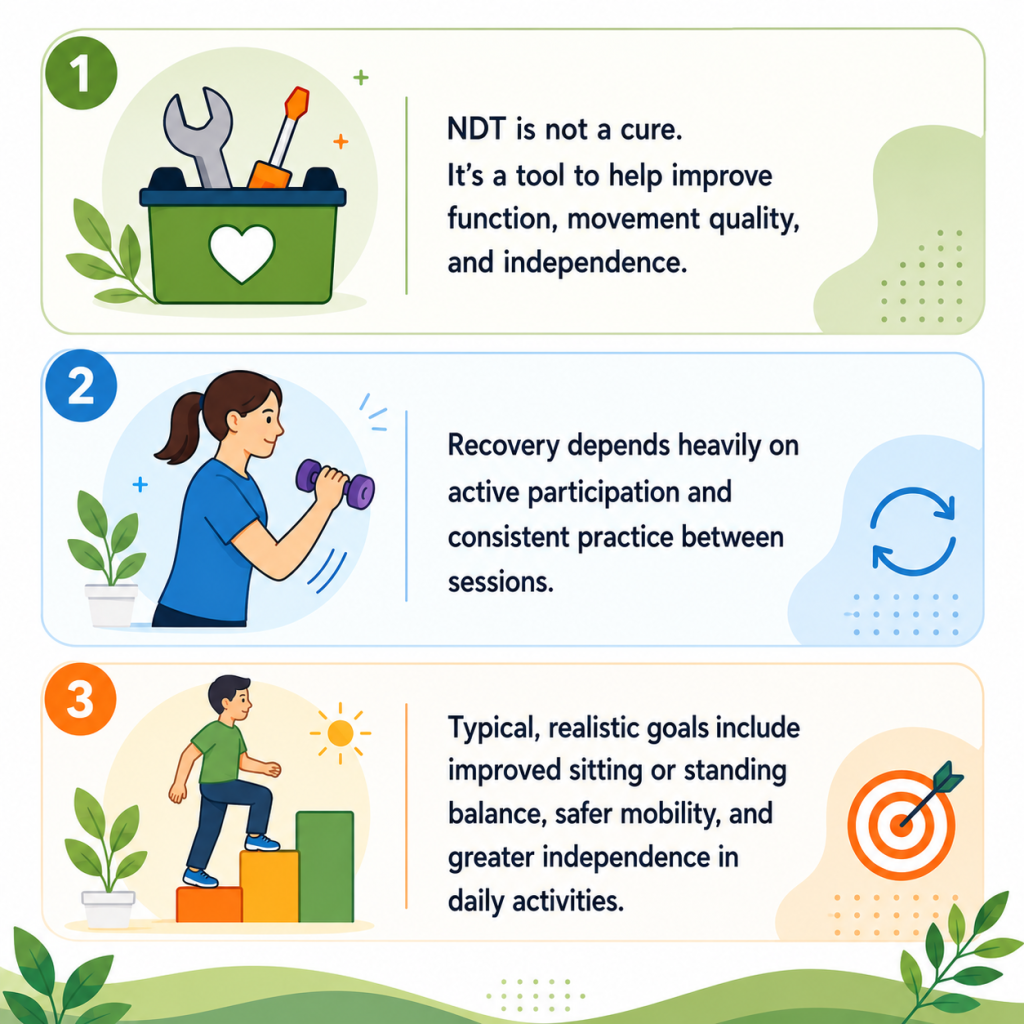
- NDT is not a cure. It’s a tool to help improve function, movement quality, and independence.
- Recovery depends heavily on active participation and consistent practice between sessions. Not passive treatment alone.
- Typical, realistic goals include improved sitting or standing balance, safer mobility, and greater independence in daily activities.
Why Choose Our Bobath/NDT Team
Choosing the right team for Neurodevelopmental Treatment (NDT) matters as much as choosing the right approach. Canada Scoliosis and Neuro Center’s physiotherapists are trained in the Bobath Concept and combine it with other evidence-based methods to build a plan that fits you.
Whether you’re a parent looking for support for a child with cerebral palsy, or an adult rebuilding movement after a stroke or brain injury, our team creates individualized treatment plans based on your specific goals, needs, and stage of recovery.
Ready to get started?
Book a consultation with Canada Scoliosis and Neuro Center’s neuro physiotherapy team to talk about how NDT could fit your recovery plan.
Frequently Asked Questions
Is NDT the same as regular physiotherapy?
NDT is a specialized approach within physiotherapy. A therapist trained in NDT still uses general physiotherapy knowledge, but applies specific hands-on facilitation techniques focused on movement quality.
How long does it take to see results with NDT/Bobath therapy?
This varies widely from person to person. Some people notice changes within a handful of sessions, while chronic or complex conditions often need longer-term or more intensive blocks of care.
Is NDT suitable for both children and adults?
Yes. NDT is used across the lifespan, from infants with early motor delays to adults recovering from stroke or living with progressive conditions like Parkinson’s disease.
Do I need to do anything between therapy sessions?
Yes. Home exercise programs and caregiver training are a core part of NDT. Practicing consistently between sessions plays a big role in how much progress you make.
Note: This article is for general educational purposes and isn’t a substitute for individualized medical advice. Please speak with a licensed physiotherapist or your care team about what’s right for your specific condition.
Key Takeaways
- Neurodevelopmental Treatment (NDT), also called the Bobath Concept, is a hands-on physiotherapy approach for people with brain, spinal cord, or nerve conditions.
- It focuses on the quality of movement, not just repetition, and is grounded in neuroplasticity.
- It’s commonly used for stroke, cerebral palsy, traumatic brain injury, and MS.
- NDT is not a cure, it’s a tool to improve function, and progress depends on active participation.